Security cameras, surveillance & smart home · Denver metro and the Front Range Find your city ↗ Call (720) 487-1226
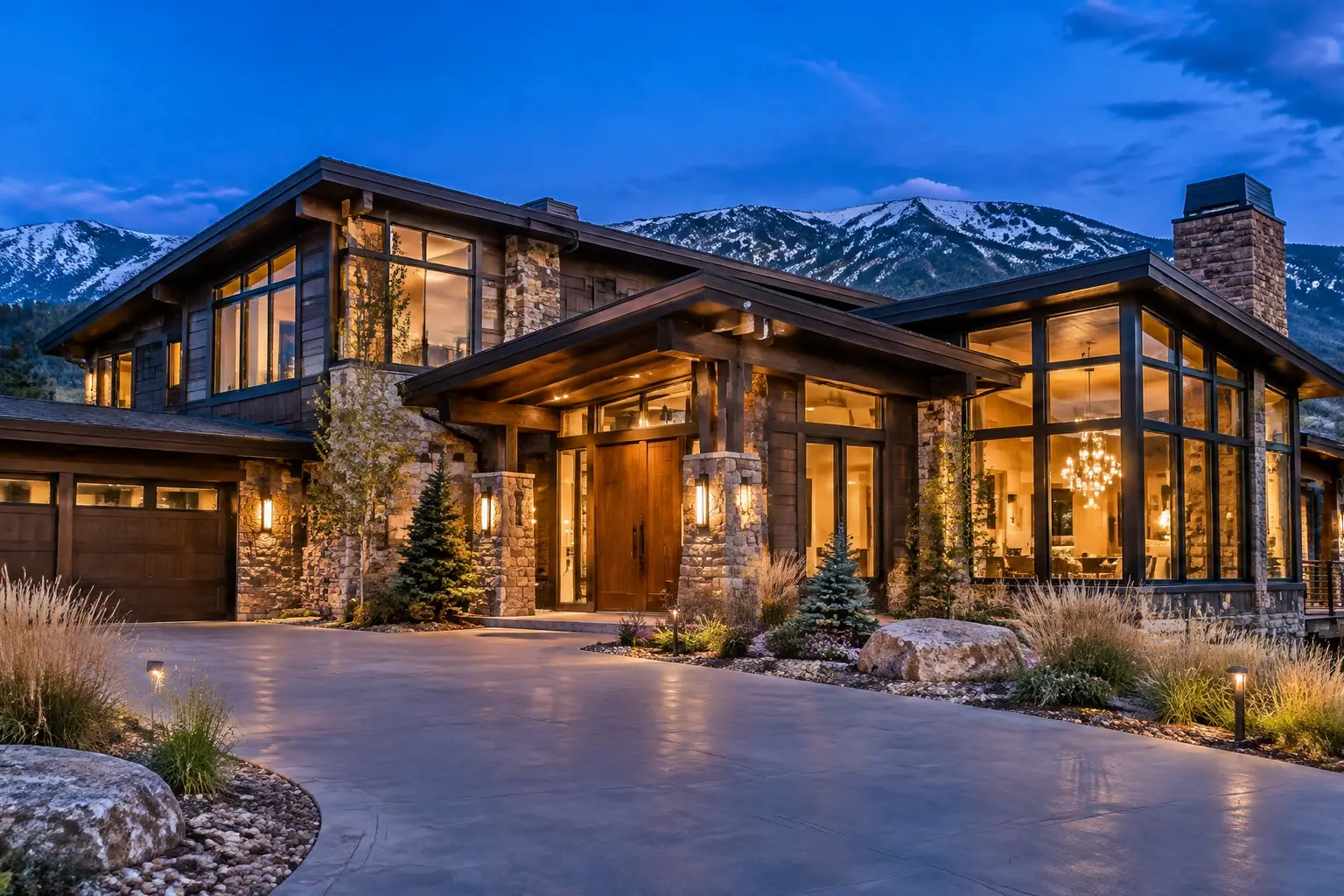
Large stone and timber Front Range home at dusk, warm lit windows, with an exterior security camera above the entry

RESOLUTION WITH JUDGEMENT

Smart & 4K Camera Systems in Denver, CO

Higher resolution and smarter detection are worth paying for in specific places and wasted in others. A 4K camera covering a wide driveway gives you a readable detail at thirty feet that a lower-resolution camera cannot. The same 4K camera over a back door two metres away just produces larger files. Smart detection has the same shape: it is excellent at telling a person from a tree moving and poor at reading intent. We put the resolution and the intelligence where they change the outcome.

Planned on the propertyEntries and sightlines firstWritten scopeCabling, zones and retention agreed
Your property. Watched properly.Request form

Request a quote

A little about the property and what you want covered.

Your inquiry goes to our team. Sending a request does not schedule an installation; we will follow up about the property, the scope and availability.

§ 01 / The details

Start with a clear scope.

Use these items to frame the conversation. Final inclusions depend on the property, the existing wiring and the agreed plan.

  • Resolution chosen per position against the distance that matters
  • Pixels-on-subject reasoning explained rather than a headline megapixel count
  • Person, vehicle and package classification set up to reduce false alerts
  • Detection zones and rules drawn on site and revisited after a week
  • Low-light and infrared behaviour checked at the actual position
  • Glare, porch-light and reflective-surface conflicts resolved
  • Optical zoom or dedicated plate-capture camera where it is justified
  • Storage and network impact of higher resolution calculated up front
  • Local recording capability alongside any cloud service
  • Accounts, credentials and firmware update process documented
  • Facial recognition features enabled only as a deliberate decision

§ 02 / The system

Where resolution actually changes the result

Resolution matters as pixels on the subject, not as a number on the box. The useful question is how many pixels land on a face at the distance where you need to recognise one. A 4K camera at thirty feet can give you that; the same sensor zoomed wide across a whole yard gives you a person-shaped blur at the fence line.

So the resolution choice follows the position. Wide approaches, long driveways, large back yards and anywhere a plate or a face must be read at distance justify 4K or a camera with optical zoom. Doorways, side gates, garage interiors and tight passages do not: a well-placed 2K camera there will outperform a badly placed 4K one every time, cost less to store, and load faster when you are scrubbing through footage on a phone.

It also costs storage. Doubling resolution across eight cameras changes the recorder and drive sizing substantially, which is a conversation to have before the order, not after.

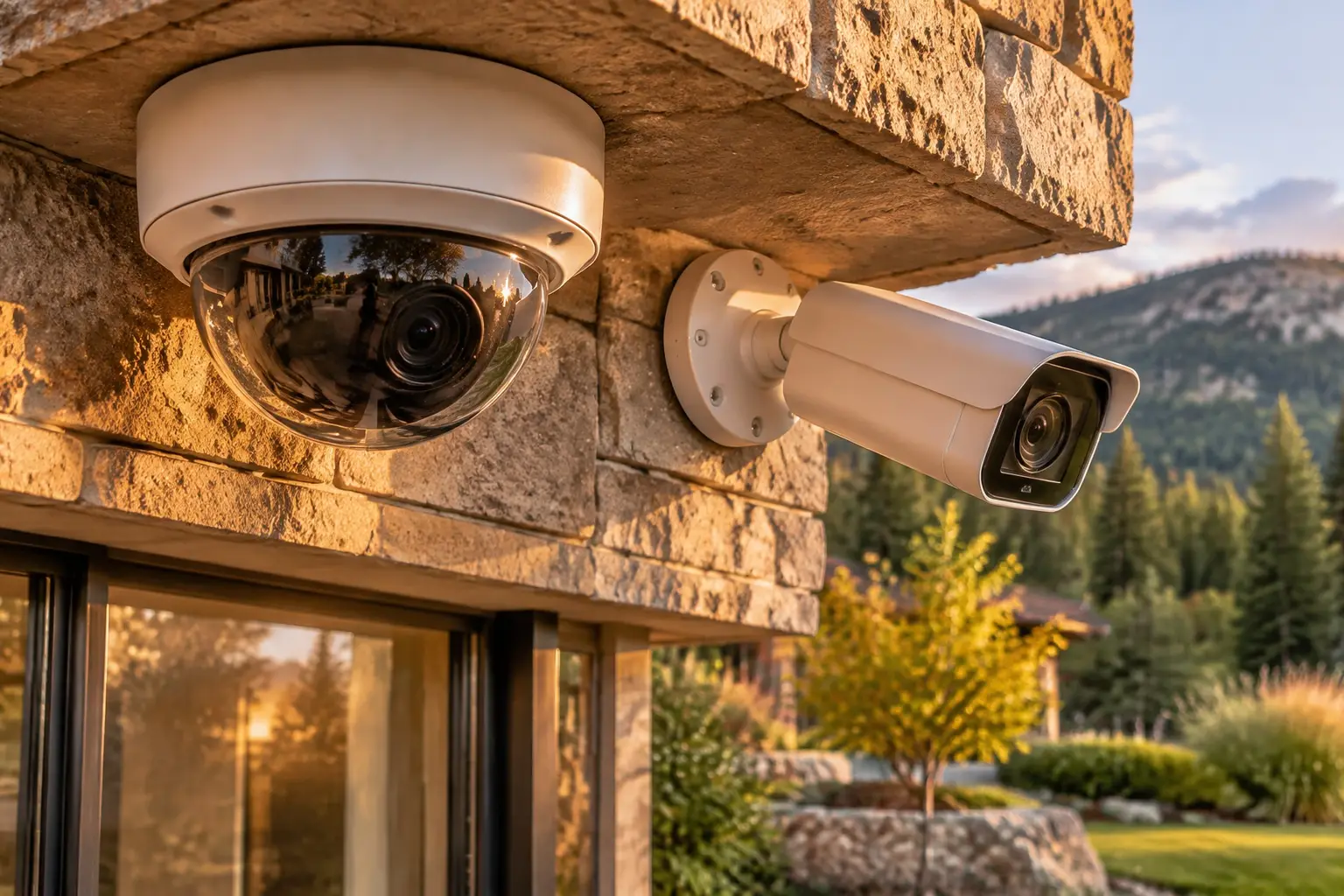
A dome camera and a bullet camera mounted under the stone eave of an upscale home, covering the same approach

§ 03 / The details

What smart detection is good and bad at

On-camera analytics have become genuinely useful for one thing: cutting false alerts. Person, vehicle and animal classification means your phone stops buzzing every time a shadow crosses the lawn or snow slides off the roof, and that single change is what makes people keep notifications switched on.

Beyond classification, be sceptical. Line-crossing and zone intrusion rules work well when drawn carefully and badly when drawn hopefully. Facial recognition and familiar-face features vary widely in accuracy, raise their own privacy questions for visitors and staff, and should be a deliberate choice rather than a default. Package detection is handy. Anything marketed as predicting intent is not something to buy a system for.

We tune the detection zones and rules on site, in the light and weather you actually have, then revisit them once you have lived with the alerts for a week.
§ 04 / The system

Night, glare and the Colorado light

Most footage that matters is recorded in poor light, so low-light performance deserves more attention than the headline resolution. Infrared gives you a usable monochrome image but is easily defeated by a porch light in frame, a reflective wall close to the lens, or snow bouncing the illumination straight back. Cameras with a genuinely large sensor and a fast lens hold colour at dusk, which is often more identifiable than bright infrared.

Colorado sun is the other half. Strong direct light at altitude, deep shadow next to it, and a west-facing camera at six in the evening will all test the dynamic range. A spotlight-equipped camera can help a driveway but also flattens detail close in. We check each position at the time of day you care about and change the camera type rather than accepting a view that only works at noon.

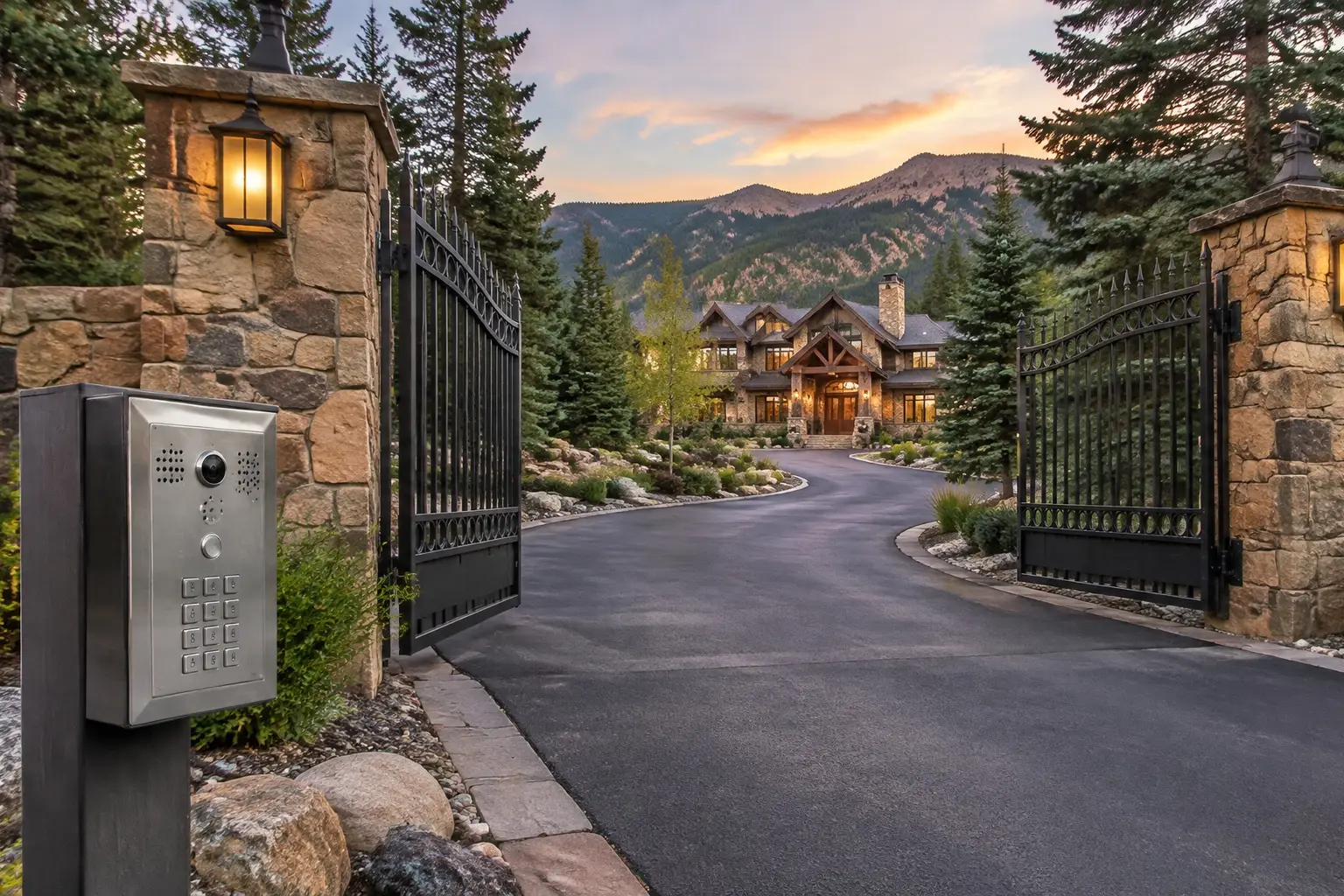
A gated private driveway entrance with stone pillars, an intercom keypad and a large home set back beyond the gates

§ 05 / The details

Keeping a smart system working in three years

Smart cameras are software products with a lens attached, and that has consequences. Ask what happens when a manufacturer drops a model, retires an app, moves a previously free feature behind a subscription, or ends firmware support. A system built around open standards and a local recorder keeps working through all of those; a system built entirely inside one company's cloud does not.

We plan for that: cameras that can record to a local recorder as well as a cloud service, documented accounts and credentials, firmware updates explained, and no critical function that exists only inside a single app. It is also why cabling matters more than the camera choice. Cable outlives three generations of camera, so running it to the right positions once protects the far larger investment in the building itself.

§ 06 / Common questions

The questions
worth asking first.

Clear answers before anyone drills a hole. Start with what homeowners ask most.

More answers ↗

Is 4K worth it for a home?

At some positions, clearly. At others it just costs storage. Put it where distance is the problem: long driveways, wide yards, approaches where you need a face or a plate at thirty feet or more. At a front door or a side gate, position and low-light performance will do more for you than resolution.

Do smart cameras need a subscription?

Many sell their better detection, cloud storage and some alert features as a subscription, and some have moved previously free features behind one. Ask what the camera can do with no subscription at all, and make sure the system still records and functions in that state. A local recorder is the usual answer.

Can cameras tell a person from an animal?

Modern on-camera classification is reliable enough at this to be the main reason notifications stay bearable, especially with wildlife and foothills properties. It is not perfect in heavy snow, fog or at the edge of its range, and it is only as good as the zones it is applied to.

Should I use facial recognition?

Only knowingly. Accuracy varies, it builds a record about identified people including visitors and anyone who works at your property, and it raises questions that plain video does not. It is easy to enable and should be a decision you make rather than a default we leave on.

Will a 4K camera slow down my internet?

Recording locally does not touch your internet at all. Remote viewing and cloud upload do, and that is where high resolution is felt, particularly on connections with limited upload speed. We check your upload bandwidth and configure substreams so remote viewing stays usable while the recorder keeps full quality.

§ 07 / The details

Local installation. Metro-wide planning.

Choose your area for the local approaches, permit questions and covenant rules that come up there.

A good system starts with the walk around the house.

Tell us about
the property.
And the blind spots.

The entries, the driveway, what the existing wiring can carry and what the covenants allow. Those four details shape a system worth paying for.

  • Say which approaches you cannot see today.
  • Tell us about existing cabling, panels or a prior system.
  • Agree the scope, the zones and the retention before work starts.
Your property. Watched properly.Request form

Start with your property

A little about the property and what you want covered.

Your inquiry goes to our team. Sending a request does not schedule an installation; we will follow up about the property, the scope and availability.

Cameras where they matter. Nothing you cannot use.

Know what
happens at
your door.

Call (720) 487-1226
Colorado Home Security · DenverCall (720) 487-1226
Your property. Watched properly.Request form

Before you go: want a camera plan?

A little about the property and what you want covered.

Your inquiry goes to our team. Sending a request does not schedule an installation; we will follow up about the property, the scope and availability.