Security cameras, surveillance & smart home · Denver metro and the Front Range Find your city ↗ Call (720) 487-1226
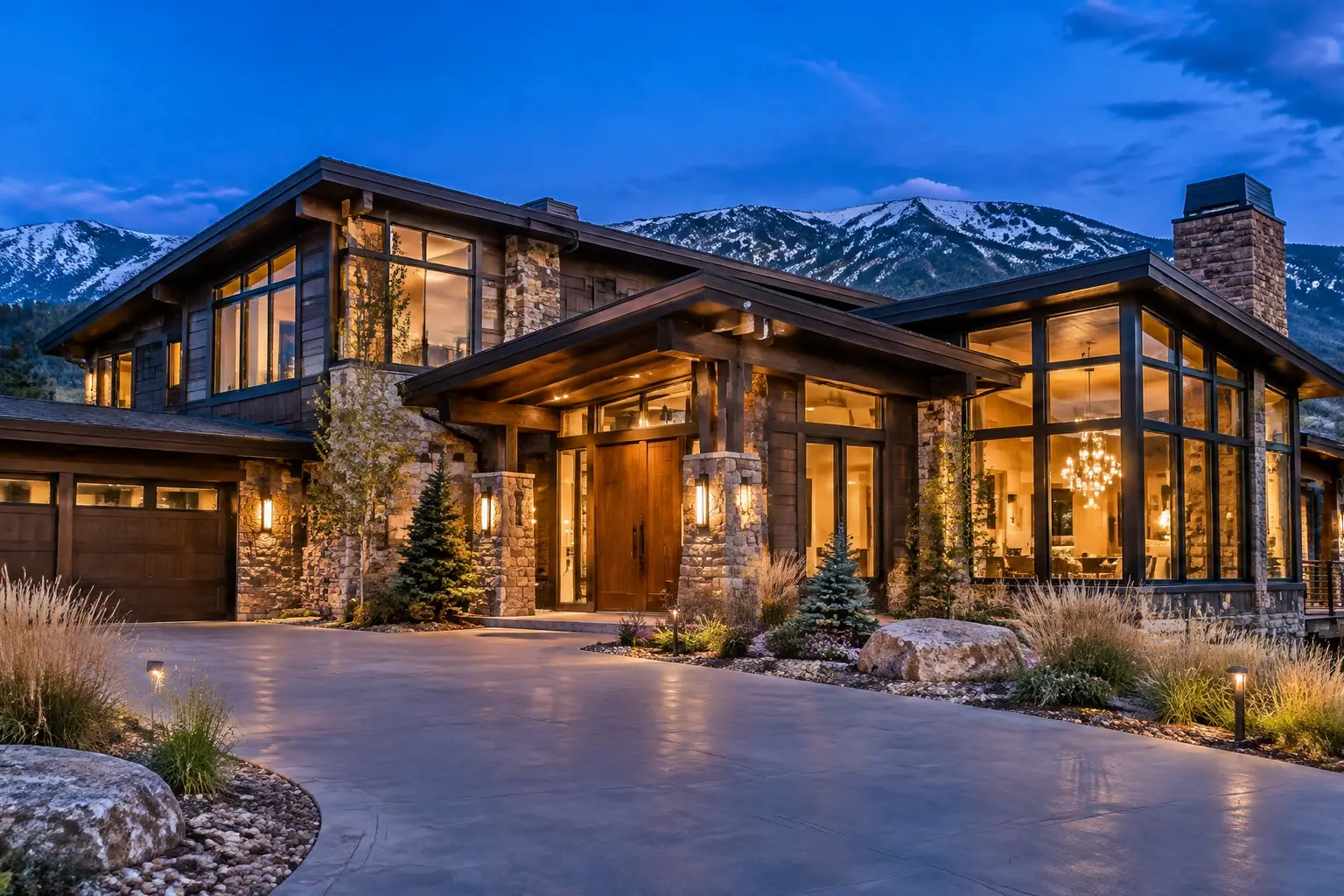
Large stone and timber Front Range home at dusk, warm lit windows, with an exterior security camera above the entry

LIGHTS, LOCKS, SCENES

Home Automation in Denver, CO

Home automation is worth doing when it removes a chore and worth skipping when it adds one. Lights that come on at dusk, a thermostat that knows the house is empty, a door that locks itself at eleven, a garage that closes behind you, a scene that shuts the house down for the night in one press: those are the rules people keep. A wall of apps and a hub nobody can fix when it drops offline is the version that gets ripped out. We build the first kind.

Planned on the propertyEntries and sightlines firstWritten scopeCabling, zones and retention agreed
Your property. Watched properly.Request form

Request a quote

A little about the property and what you want covered.

Your inquiry goes to our team. Sending a request does not schedule an installation; we will follow up about the property, the scope and availability.

§ 01 / The details

Start with a clear scope.

Use these items to frame the conversation. Final inclusions depend on the property, the existing wiring and the agreed plan.

  • A routine-first list of the chores automation should remove
  • Minimum device list to carry those routines, switch by switch
  • Hub and network suitability assessed before devices are ordered
  • Local control preferred, with cloud dependencies identified explicitly
  • Wall switches, keys and manual controls retained everywhere
  • Lighting scenes set with consistent colour temperature and sensible dimming
  • Dusk and sunrise based exterior lighting rather than clock schedules
  • Thermostat and zoning set for occupancy and Colorado temperature swings
  • Motorised shades where solar gain and glare justify them
  • Written device, account and rule documentation at handover
  • A household walkthrough so everyone can operate the house

§ 02 / The system

Start from the chores, not the catalogue

The useful way into automation is to list the things you do every day that a house could do for itself. Walking the house turning lights off. Remembering the garage. Adjusting a thermostat in a room nobody is in. Getting up to check a door. Each of those turns into one rule, and one rule you keep is worth more than ten you disable within a month.

From that list we work out the minimum kit: which switches need replacing, which fixtures want a smart bulb instead, whether the thermostat is worth changing, whether the locks and the garage opener can already participate. Many houses need less equipment than expected, because a few switches at the right points carry most of the daily routine.

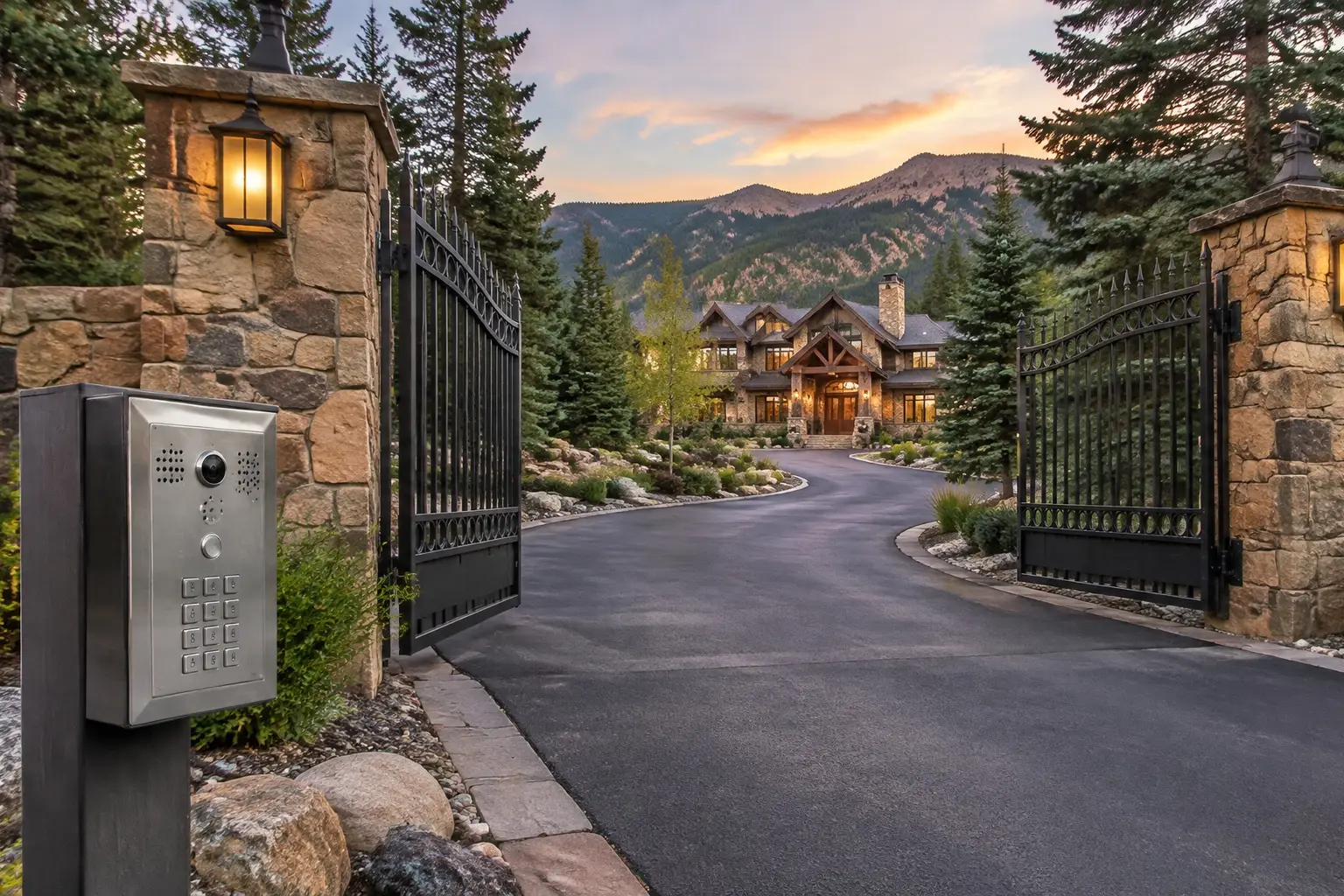
A gated private driveway entrance with stone pillars, an intercom keypad and a large home set back beyond the gates

§ 03 / The details

The hub, the network and the failure mode

Automation stands on infrastructure, and this is where it either becomes reliable or becomes a hobby. Devices arrive on several radios and standards, a hub usually has to translate between them, and all of it runs over your network. A house with marginal Wi-Fi and no wired backbone will produce intermittent automation faults that look like device failures and are not.

So the design question is what happens when something is unavailable. Rules that run locally on a hub keep working when your internet is down; rules that run in a manufacturer's cloud do not. Every light should still work from its wall switch. Every lock should still open with a key. Every door should still move from its wall button. We build with local control where it is available, and we are explicit about which functions depend on an internet connection and a vendor's service continuing to exist.

§ 04 / The system

Lighting, climate and shades that behave

Lighting is where automation is most visible and most easily overdone. Warm, consistent colour temperature, switches that still work the way a guest expects, dimming set so a scene does not snap to full, and outside lights that come on at dusk rather than at a clock time that drifts through the seasons. On Front Range properties exterior lighting also does genuine security work, so it belongs in the same conversation as cameras.

Climate is quieter and often saves more. A thermostat that follows occupancy rather than a fixed schedule suits Colorado's daily temperature swing, and zoning matters in houses with a finished basement or a sunny upper floor. Motorised shades are a luxury that earns its place on big west-facing glass, where they cut late-afternoon heat gain and glare noticeably. In each case the rule should be simple enough to explain to a visitor in a sentence.

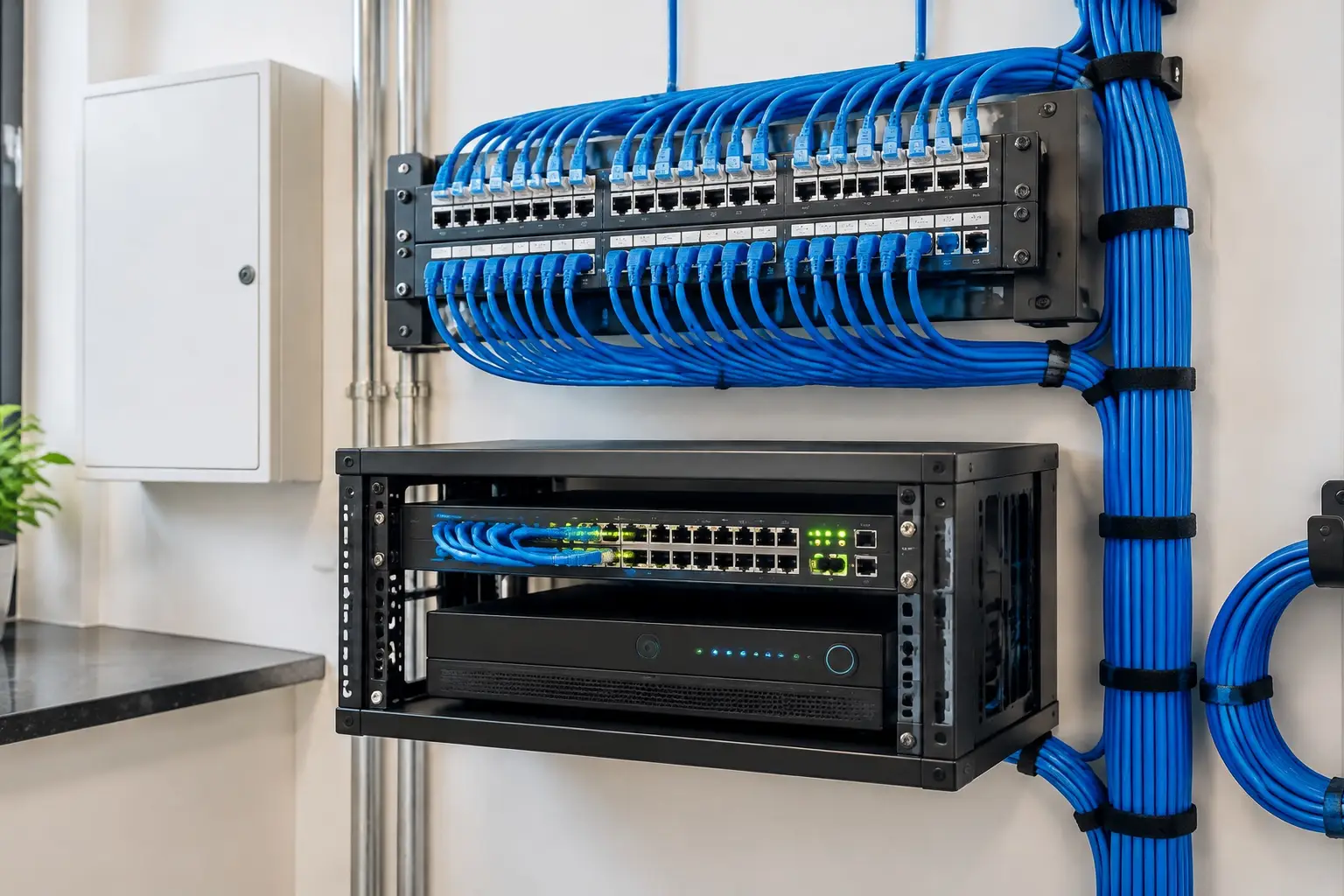
A structured wiring panel with labelled network cables feeding a switch and a video recorder

§ 05 / The details

Keeping it maintainable

The difference between an automation system that lasts and one that frustrates is documentation and restraint. We keep a written list of devices, where they are, which hub or account they belong to, and what each rule does. We avoid chains of rules that depend on each other in ways nobody can trace in a year. And we prefer mainstream, well-supported equipment over whatever is cheapest, because an orphaned device with a dead app is a wall fitting that has to be replaced.

We also keep the household in mind, not just the person who commissioned the system. If a partner, a child, a guest or a house-sitter cannot operate the lights and the locks without instruction, the system is not finished. Physical controls stay, the app is a convenience, and the handover ends when someone else in the house can run it.
§ 06 / Common questions

The questions
worth asking first.

Clear answers before anyone drills a hole. Start with what homeowners ask most.

More answers ↗

Do I need a hub?

It depends on the devices. A handful of items on one ecosystem may not need one; a mixed system across several radios and brands usually does, and a hub also lets rules run locally so they survive an internet outage. We would rather specify one good hub than have three apps that do not talk to each other.

What happens to my lights if the internet goes down?

Every switch and fixture we install still works manually, and rules that run locally on a hub keep running. Anything that depends on a manufacturer's cloud will pause until the connection returns. We tell you which is which, in writing, so an outage is not a surprise.

Will automation work with the equipment I already own?

Often partly. Existing smart bulbs, a thermostat, a lock or a garage controller can frequently be brought into a single system, and sometimes one of them is the item holding everything else back. We audit what you have, say what integrates cleanly and what does not, and avoid buying replacements you do not need.

Is it secure to automate locks and doors?

It can be, with individual credentials, two-factor authentication on the accounts, local control where possible and conservative rules. We do not set up automations that unlock doors without a deliberate action, and we keep mechanical overrides in place. The weakest point in practice is a shared password, not the hardware.

Can automation be added to a house in stages?

Yes, and that is usually the sensible route. Begin with the routines that annoy you most, confirm they stick, then extend. The one thing worth doing early is the network and any cabling, because that is the part that is disruptive to add later.

§ 07 / The details

Local installation. Metro-wide planning.

Choose your area for the local approaches, permit questions and covenant rules that come up there.

§ 08 / The details

Related systems for the same property.

A good system starts with the walk around the house.

Tell us about
the property.
And the blind spots.

The entries, the driveway, what the existing wiring can carry and what the covenants allow. Those four details shape a system worth paying for.

  • Say which approaches you cannot see today.
  • Tell us about existing cabling, panels or a prior system.
  • Agree the scope, the zones and the retention before work starts.
Your property. Watched properly.Request form

Start with your property

A little about the property and what you want covered.

Your inquiry goes to our team. Sending a request does not schedule an installation; we will follow up about the property, the scope and availability.

Cameras where they matter. Nothing you cannot use.

Know what
happens at
your door.

Call (720) 487-1226
Colorado Home Security · DenverCall (720) 487-1226
Your property. Watched properly.Request form

Before you go: want a camera plan?

A little about the property and what you want covered.

Your inquiry goes to our team. Sending a request does not schedule an installation; we will follow up about the property, the scope and availability.