Security cameras, surveillance & smart home · Denver metro and the Front Range Find your city ↗ Call (720) 487-1226
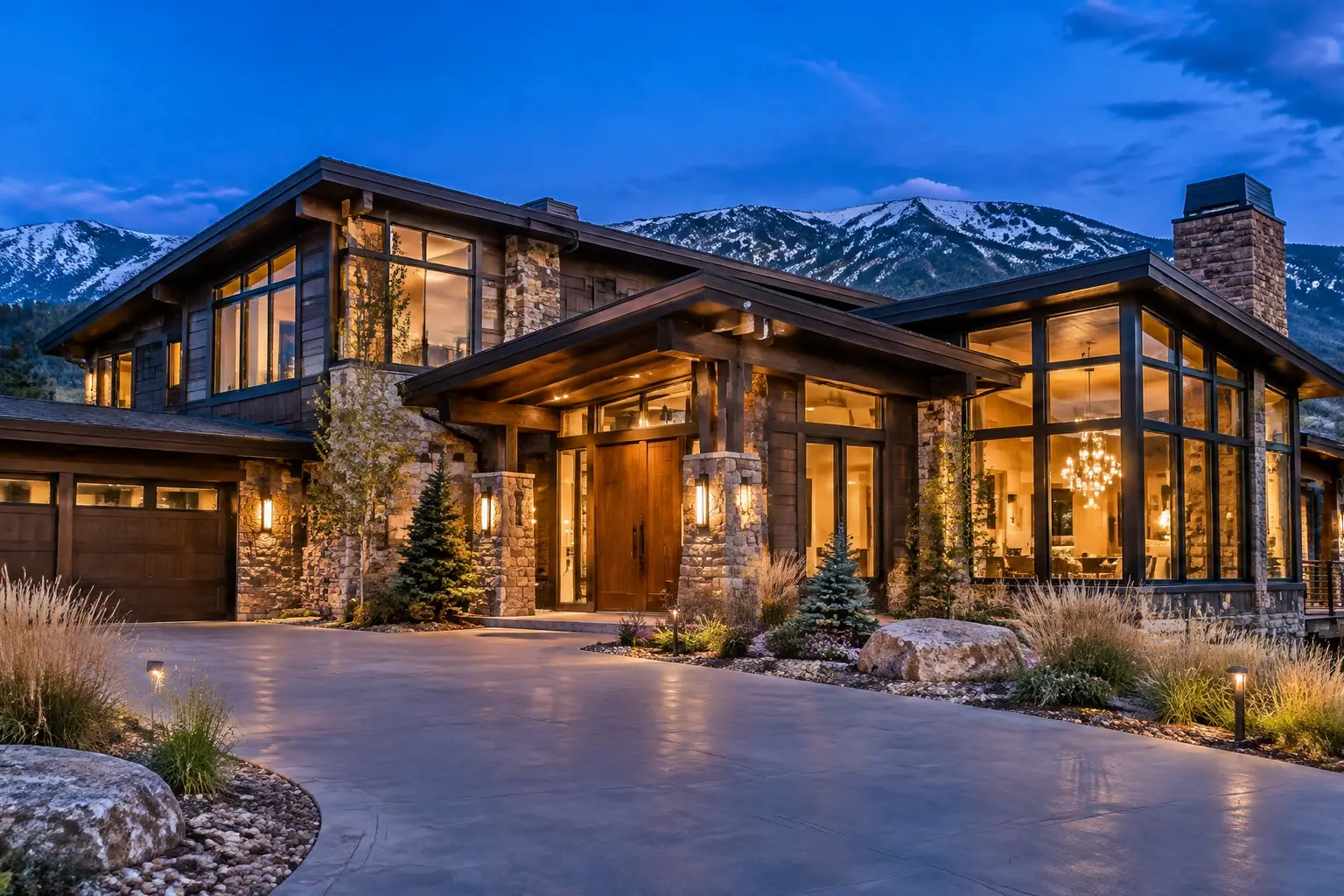
Large stone and timber Front Range home at dusk, warm lit windows, with an exterior security camera above the entry

DRIVEWAYS, GATES, LONG LOTS

Outdoor & Perimeter Cameras in Denver, CO

The perimeter is where Colorado properties get interesting. A quarter-acre lot in Arvada, a half-acre with a long driveway in Parker, a fenced yard backing onto open space, and a foothills property with one approach and no streetlight are four different problems. Outdoor cameras have to cover distance, handle weather and wind, see in genuine darkness, and avoid filling your phone with alerts every time wildlife crosses the yard. That takes position, lighting and tuning, not more cameras.

Planned on the propertyEntries and sightlines firstWritten scopeCabling, zones and retention agreed
Your property. Watched properly.Request form

Request a quote

A little about the property and what you want covered.

Your inquiry goes to our team. Sending a request does not schedule an installation; we will follow up about the property, the scope and availability.

§ 01 / The details

Start with a clear scope.

Use these items to frame the conversation. Final inclusions depend on the property, the existing wiring and the agreed plan.

  • A camera aimed along the driveway approach rather than across it
  • Dedicated plate-capture position where plate reading is required
  • Gate, side-yard and blind-approach positions identified during the walk
  • Detection zones drawn to exclude street, sidewalk and neighbouring property
  • Person and vehicle classification to control wildlife and shadow alerts
  • Motion lighting positioned to help the camera rather than blind it
  • Weather-rated mounts into solid material with sealed penetrations
  • Under-eave and soffit positions preferred for lens protection and service access
  • Buried conduit, fibre or point-to-point wireless for out buildings
  • Power strategy for remote positions, including realistic solar expectations
  • Serviceable mounting heights so lenses can actually be cleaned

§ 02 / The system

Driveways, gates and the single approach

A long driveway is the best place in most properties to spend camera money, because it is where a vehicle has to pass and slow down. One camera aimed along the drive, close enough to resolve, beats three wide views from the house. If plate capture matters, that is a dedicated camera at the right distance and angle rather than a hopeful crop of a general view.

Gates and side yards are the opposite problem: short distance, often no power, frequently the only approach nobody can see from the street or a neighbouring window. These are the positions homeowners most often skip and most often regret. Where a cable route is genuinely impossible, a well-sited wireless camera with a solar panel is a reasonable compromise, provided you know it will be slower to alert and will need attention occasionally.

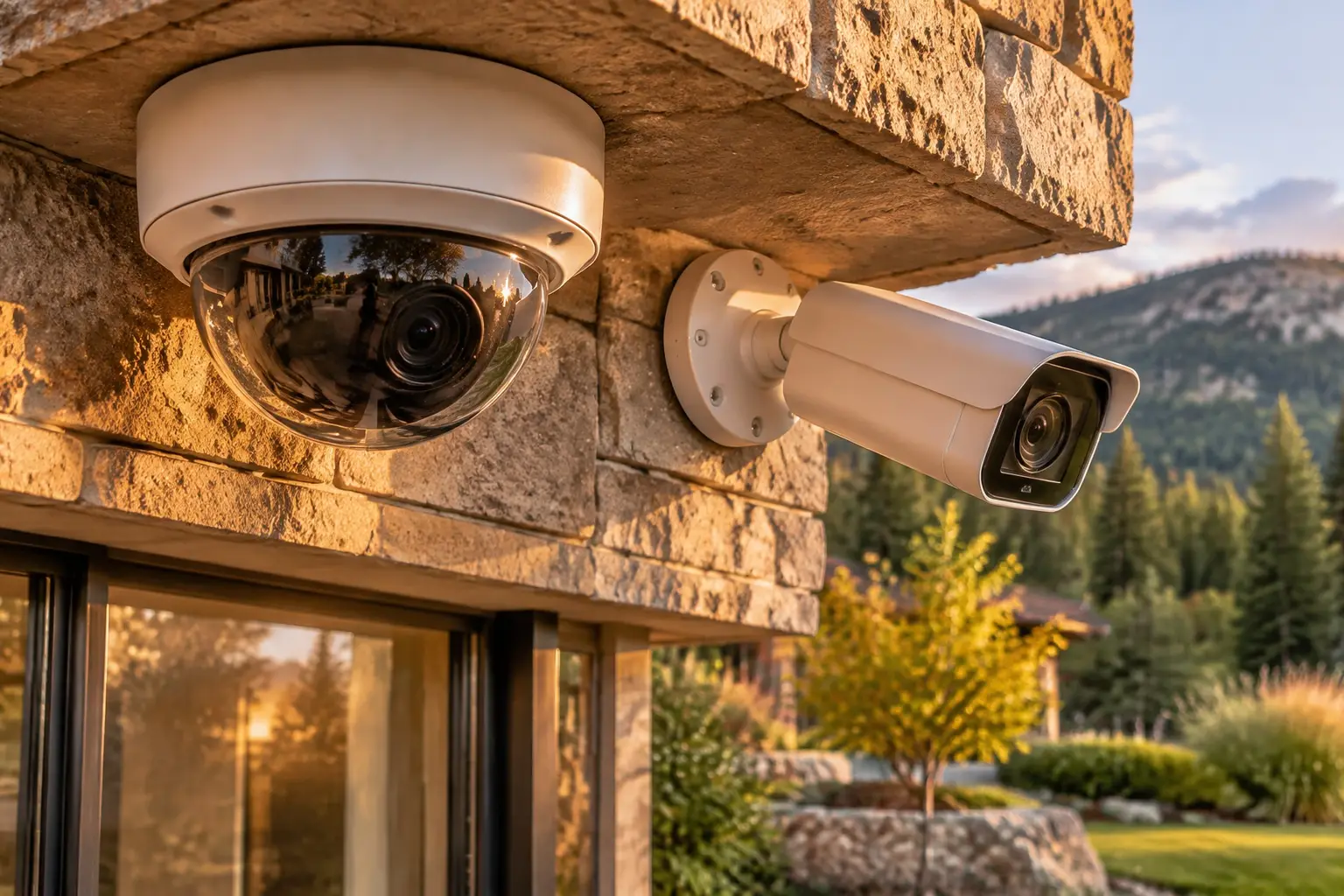
A dome camera and a bullet camera mounted under the stone eave of an upscale home, covering the same approach

§ 03 / The details

Lighting, wildlife and alert fatigue

Outdoor cameras live or die by their alert tuning. A camera watching a tree line in a Front Range yard will see deer, foxes, rabbits, shadows and blowing snow. Untuned, it produces dozens of notifications a day and trains the household to swipe them away, which defeats the whole system.

The fix is layered: draw detection zones to exclude the street, the sidewalk and the neighbour's yard; use person and vehicle classification rather than raw motion; set sensitivity against the light you actually have; and accept that a camera facing open space will always need more tuning than one facing a door.

Lighting helps more than people expect. A well-placed, warm, motion-triggered light improves colour footage, deters opportunistically and makes a property feel occupied. A harsh floodlight pointed near a camera does the opposite, blowing out the frame and leaving the subject as a silhouette.
§ 04 / The system

Weather, wind and altitude

Outdoor equipment here takes hail, blowing snow, a wide daily temperature swing, intense UV at altitude and the kind of wind that moves anything mounted on siding alone. Mounts go into solid material with sealed penetrations. Cable gets a rated jacket and a protected route. Connections go inside a housing or a weatherproof enclosure, not taped in a junction under an eave.

Soffit and under-eave positions are worth seeking out because they keep sun, snow and rain off the lens, which is what actually degrades a view over a season. Spiders and dust are the unglamorous reality of outdoor cameras: an accessible mount that can be wiped twice a year will outperform a perfect position nobody can reach. We factor serviceability into the plan.

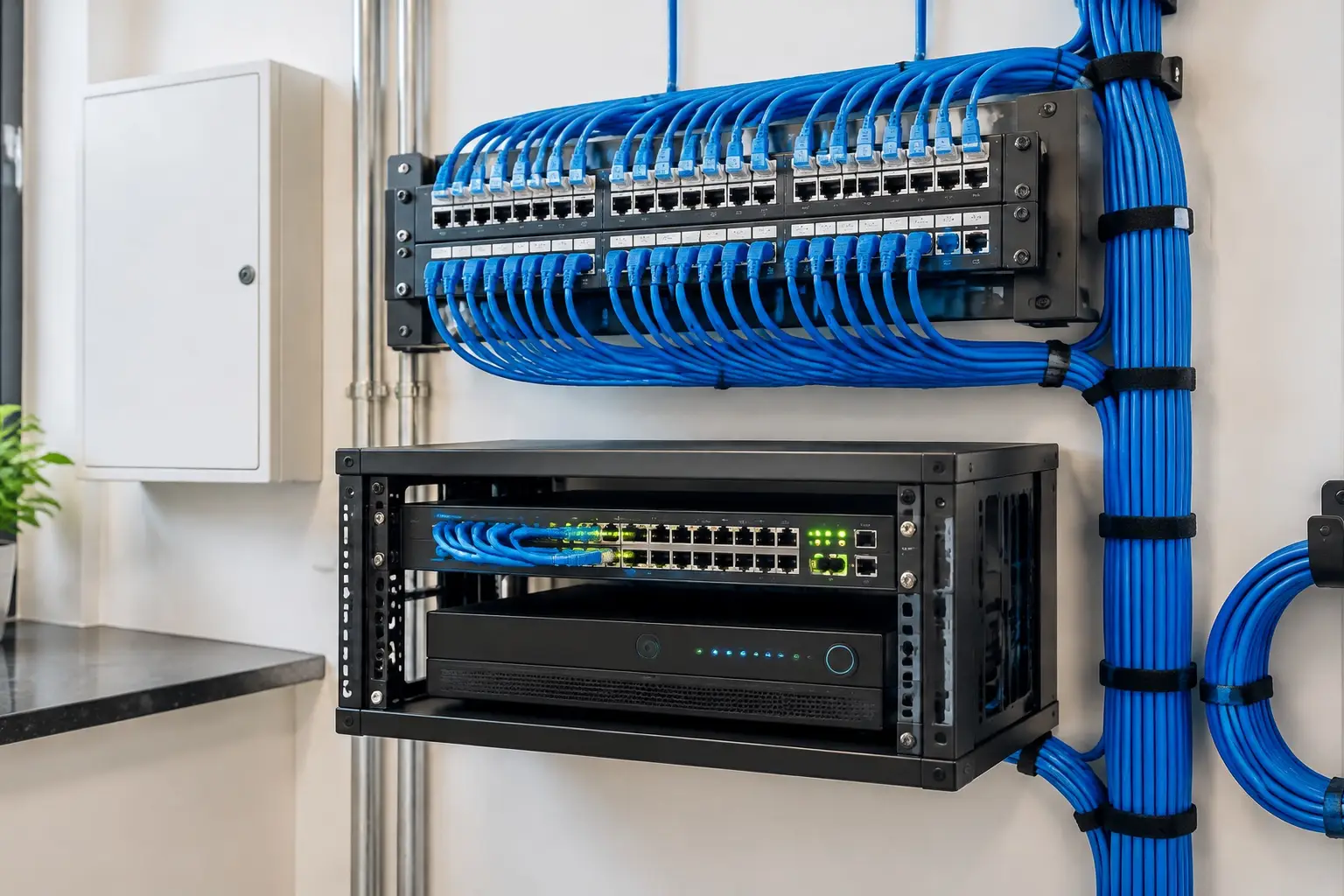
A structured wiring panel with labelled network cables feeding a switch and a video recorder

§ 05 / The details

Big lots, out buildings and the network's edge

Once a property runs past the house, the limiting factor stops being cameras and becomes the network. A detached garage, barn, shop or gate forty metres out needs a plan: direct burial or conduit-run cable where the trench is feasible, a fibre link for longer runs or anywhere lightning risk and ground potential matter, or a properly aimed point-to-point wireless bridge where neither is practical.

Power is the other half. A camera at a gate needs either a cable carrying power over Ethernet from the house, a local supply, or solar with realistic expectations about short winter days. These are the decisions that make a perimeter system work on a larger Colorado lot, and they belong in the written scope with the trenching, conduit and bridge costs visible rather than discovered mid-install.

§ 06 / Common questions

The questions
worth asking first.

Clear answers before anyone drills a hole. Start with what homeowners ask most.

More answers ↗

How do I stop getting an alert every time an animal walks past?

Three things together: tighten the detection zones so the camera is not watching open space and the street, switch from raw motion to person and vehicle classification, and tune sensitivity in the light you actually have. We set it up on install and expect to adjust it once after you have lived with it for a week.

Can I cover a detached garage or barn?

Yes, and the question is how the network reaches it. Options are buried conduit with cable, a fibre link for longer runs or where lightning risk matters, or a point-to-point wireless bridge. Each has a different cost and reliability profile, and we price the route honestly rather than assuming Wi-Fi will stretch.

Do solar cameras work through a Colorado winter?

They work, with lower expectations. Short days, low sun angles and snow on the panel all cut charging, and cold reduces battery capacity. For a gate or fence line with no cable route they are a reasonable answer provided the panel is sited for winter sun and you accept occasional intervention. For a position that matters, cable is better.

Will floodlights make the footage better?

Well-placed warm lighting that illuminates the subject improves colour footage considerably and adds deterrence. Lighting pointed at or close to the camera does the opposite. A combined camera and spotlight unit is convenient but tends to flatten detail at close range, so we choose by position.

How far can a camera see at night?

Far less than the infrared range on the box suggests, because that figure is about illumination, not identification. Expect to recognise a person at a fraction of the quoted distance, and plan positions so the subject is close enough to resolve rather than relying on reach.

§ 07 / The details

Local installation. Metro-wide planning.

Choose your area for the local approaches, permit questions and covenant rules that come up there.

A good system starts with the walk around the house.

Tell us about
the property.
And the blind spots.

The entries, the driveway, what the existing wiring can carry and what the covenants allow. Those four details shape a system worth paying for.

  • Say which approaches you cannot see today.
  • Tell us about existing cabling, panels or a prior system.
  • Agree the scope, the zones and the retention before work starts.
Your property. Watched properly.Request form

Start with your property

A little about the property and what you want covered.

Your inquiry goes to our team. Sending a request does not schedule an installation; we will follow up about the property, the scope and availability.

Cameras where they matter. Nothing you cannot use.

Know what
happens at
your door.

Call (720) 487-1226
Colorado Home Security · DenverCall (720) 487-1226
Your property. Watched properly.Request form

Before you go: want a camera plan?

A little about the property and what you want covered.

Your inquiry goes to our team. Sending a request does not schedule an installation; we will follow up about the property, the scope and availability.