Security cameras, surveillance & smart home · Denver metro and the Front Range Find your city ↗ Call (720) 487-1226
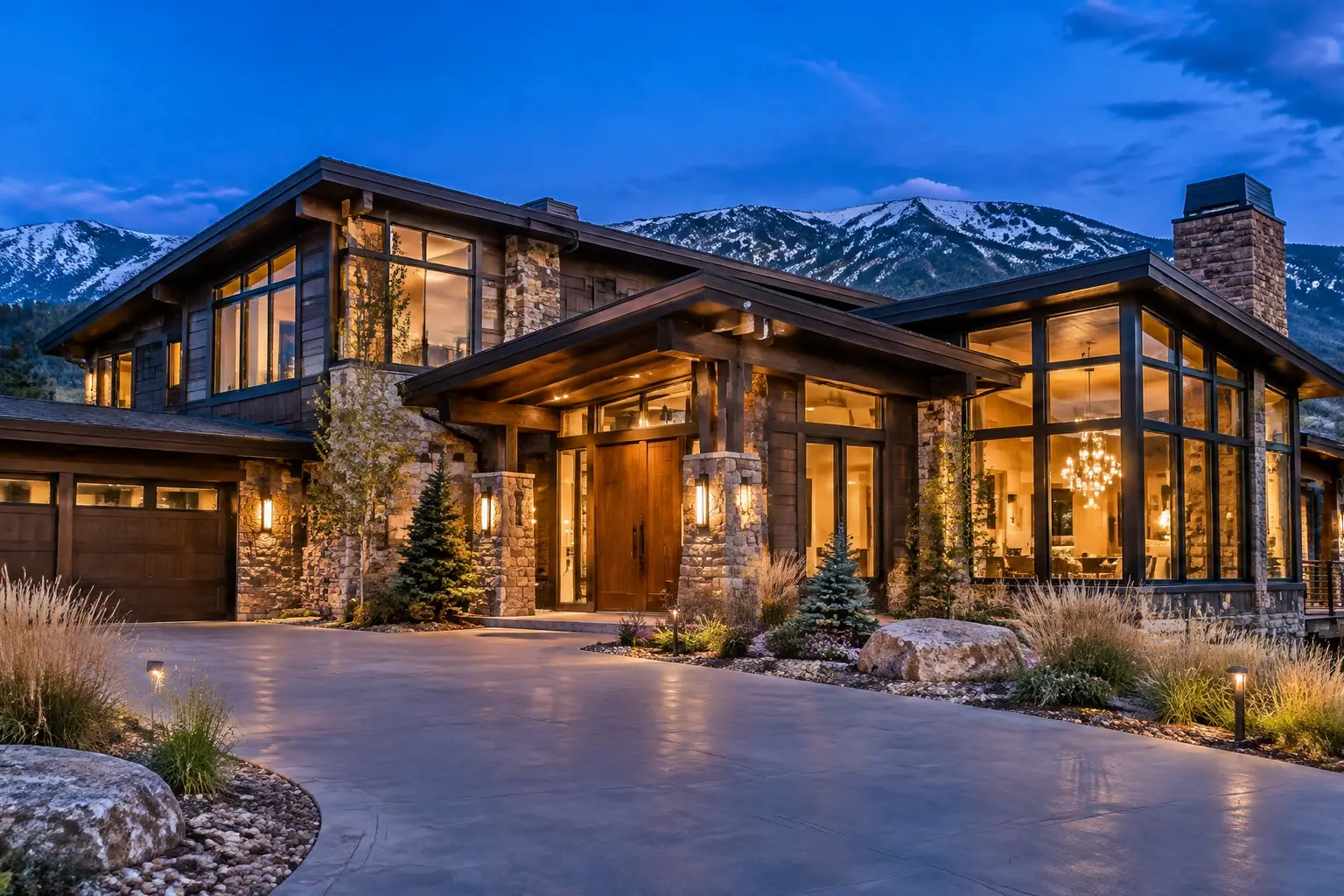
Large stone and timber Front Range home at dusk, warm lit windows, with an exterior security camera above the entry

Denver city guide / Colorado

Home Security Systems in Country Club, CO

Country Club is one of Denver's most carefully regulated residential areas: large early twentieth century houses, narrow tree-lined streets, formal front elevations and a historic district overlay that governs what can be changed on the outside of a building. Security here is as much a design and approvals exercise as a technical one. The equipment has to work, and it has to be installed in a way that respects a protected streetscape and will survive review.

Planned on the propertyEntries and sightlines firstWritten scopeCabling, zones and retention agreed
Your property. Watched properly.Request form

Request a quote

A little about the property and what you want covered.

Your inquiry goes to our team. Sending a request does not schedule an installation; we will follow up about the property, the scope and availability.

§ 01 / Country Club

A protected streetscape, planned camera by camera

In a historic district, exterior alterations including visible mounts, conduit and fittings can require review, and that genuinely shapes the plan. The approach is to choose positions where equipment is discreet: under deep eaves, in soffits, tucked at the junction of masses rather than in the middle of a formal elevation, in a colour that matches the material behind it, with cable concealed rather than surface-run.

That is not a compromise on coverage. The useful positions on these properties, the porte-cochere or porch, the driveway, the rear service door, the garage and the garden gate, are mostly in places where a camera can be sited sympathetically.

We plan positions for approval from the start, and we would rather propose a slightly different mount than install something that has to come down. Where review is needed, we provide the positions and details clearly enough to submit.
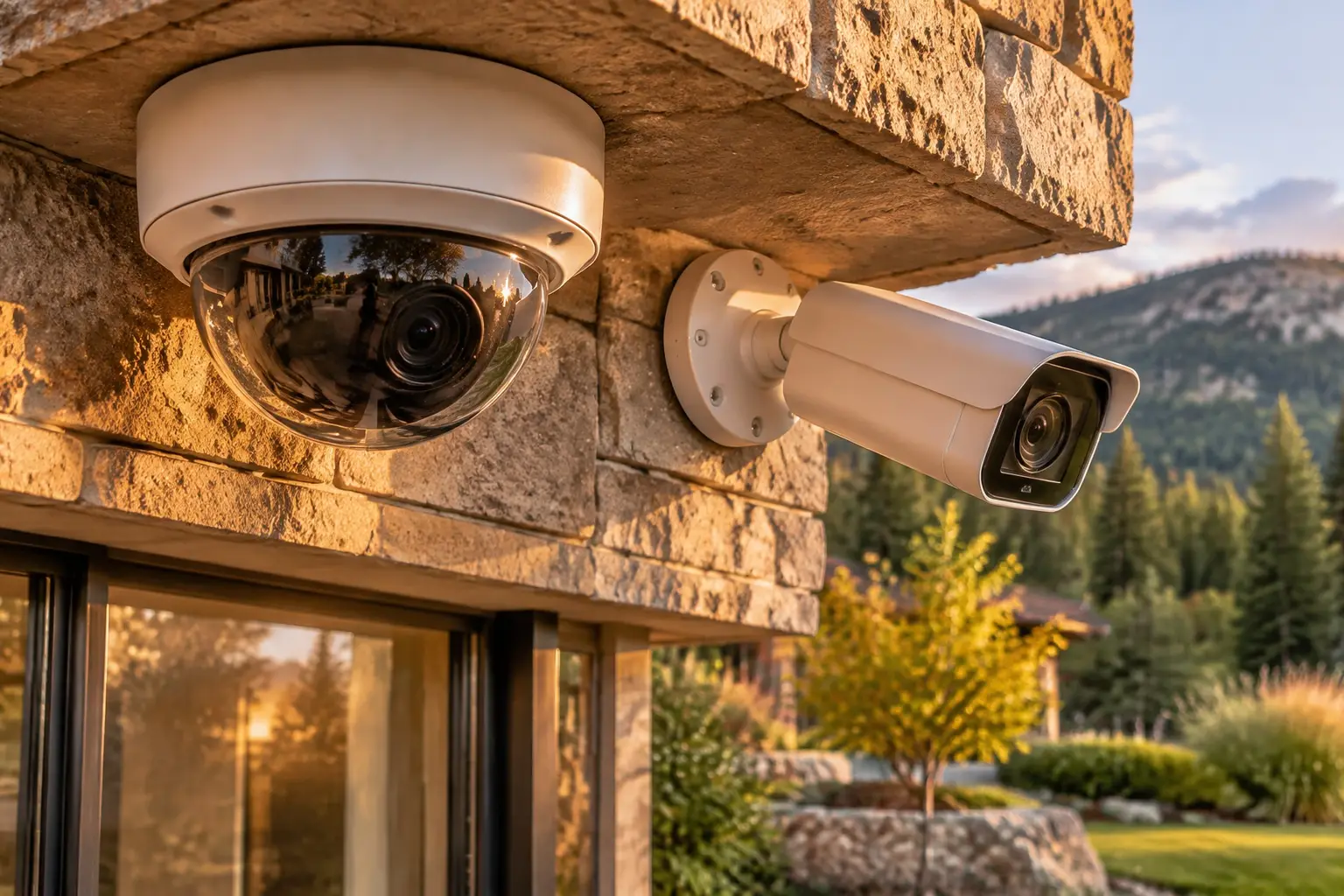
A dome camera and a bullet camera mounted under the stone eave of an upscale home, covering the same approach

§ 02 / Local detail

Large houses with service entrances

These houses were built with multiple ways in: a formal front door, a service or kitchen entrance, a basement door, sometimes a separate staff or garage stair. That matters because a security plan built around the front door misses the entrances that are actually used and least observed.

The rear and side of the property is where most of the coverage belongs: the service door, the driveway and garage, the garden gate, the basement access and any window well. Interior sensors matter more here than on a smaller house, because there are more openings and more distance between them, and a single motion sensor in a hall will not cover a house of this footprint.

Also worth mapping: the attic and basement routes. Big old houses have generous basements and chases, which usually makes cabling easier than the exterior would suggest, once someone has actually walked them.

§ 03 / Country Club

Staff, contractors and managing access

Properties like these often have regular people coming and going: a housekeeper, a gardener, a contractor during a project, a dog walker, a property manager. Managing that is where individual access codes and documented accounts matter most, and it is routinely handled with a shared code everyone knows and nobody changes.

The better arrangement is one code or credential per person, a record of which was used, and the ability to remove one without changing anything for anyone else. The same applies to camera system accounts: individual logins rather than a shared household password, with permissions set so a property manager can review footage if that is what you want and not otherwise.

We set that up at handover with a written list of who holds what, and we build in the habit of removing access when a relationship ends, which is the step that is almost always skipped.

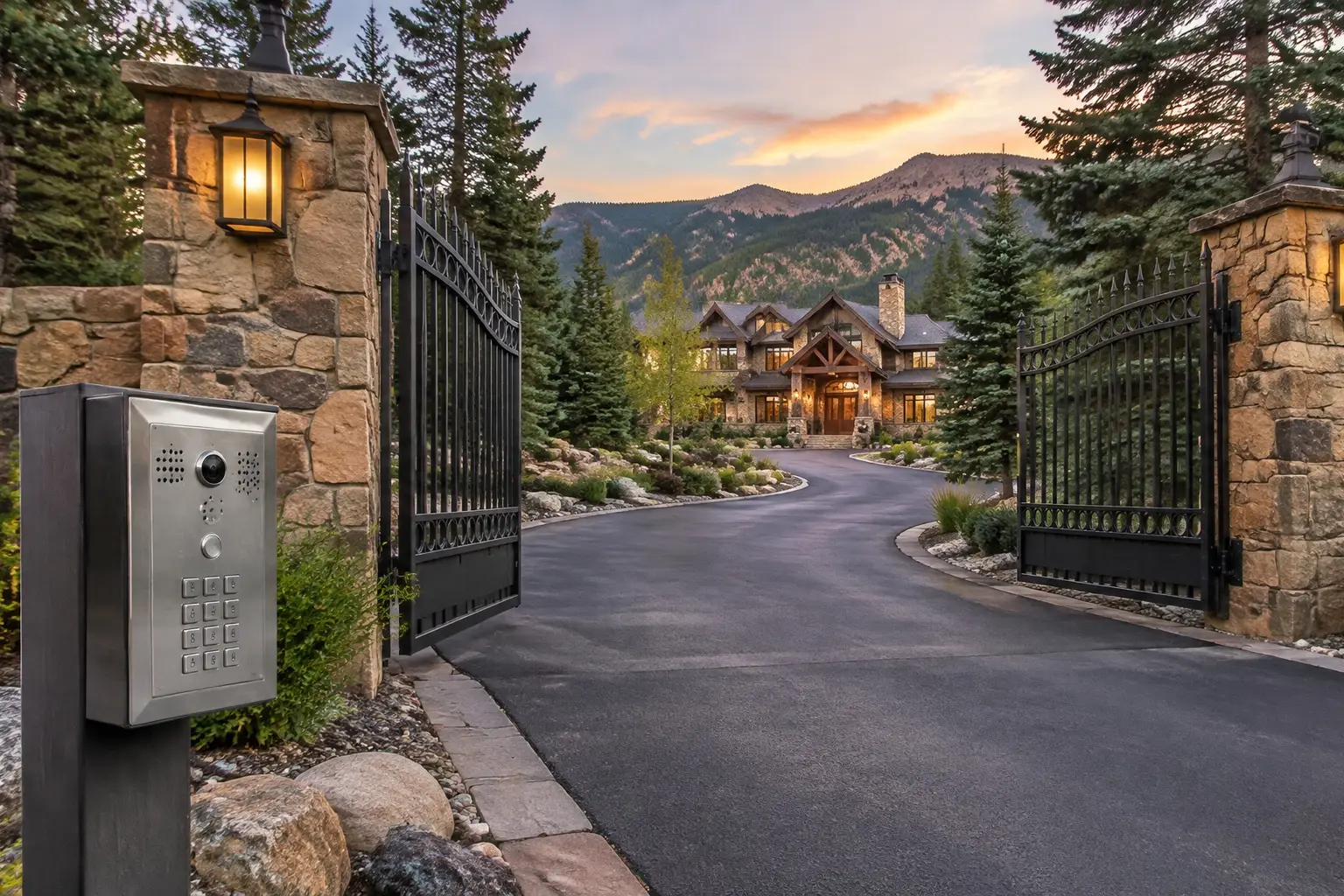
A gated private driveway entrance with stone pillars, an intercom keypad and a large home set back beyond the gates

§ 04 / Local detail

Privacy on close, formal streets

Houses here sit on narrow streets with mature trees and considerable mutual visibility despite the scale. A camera on an upper elevation can easily cover a neighbour's garden or windows, and in a neighborhood with this much continuity of ownership, that is worth avoiding carefully.

We set useful fields of view inside your own boundary, draw detection zones that stop at the property line, and keep the public street out of the recorded area wherever possible. Audio is a separate decision, as always, and in a dense street it deserves more thought than usual: review the current Colorado statutes or take your own advice, and decide deliberately rather than leaving microphones on by default.

Lighting also needs restraint here. Low-output, warm, well-shielded fixtures at the driveway and service entrance improve footage without altering the character of the street at night.

§ 07 / Common questions

The questions
worth asking first.

Clear answers before anyone drills a hole. Start with what homeowners ask most.

More answers ↗

Will a historic district stop us installing cameras?

Not in our experience, but it changes how they are installed. Exterior alterations that are visible can require review, so positions are chosen to be discreet: soffits, deep eaves, junctions between masses, matched colours and concealed cable. We plan for approval from the start and provide the detail needed to submit.

Where do cameras belong on a large older house?

At the entrances that are actually used and least observed: the service or kitchen door, the driveway and garage, the garden gate, the basement access and any window well, plus the front entry. Interior sensors matter more here than on a smaller house because of the number of openings and the distances involved.

How do we manage access for staff and contractors?

One credential per person rather than a shared code, with a record of which was used and the ability to remove a single person's access. The same for camera system accounts: individual logins with permissions set deliberately. We hand over a written list of who holds what, and the habit of removing access when someone's involvement ends.

§ 08 / The details

Country Club and the places next to it.

Neighborhood and subdivision names help organise the conversation. Confirm the exact address, the drive and the access arrangements before an installation is scheduled.

Denver Country ClubHumboldt IslandAlamo PlacitaSpeerByersBaker NorthCapitol Hill SouthSeventh Avenue Historic District

A good system starts with the walk around the house.

Tell us about
the property.
And the blind spots.

The entries, the driveway, what the existing wiring can carry and what the covenants allow. Those four details shape a system worth paying for.

  • Say which approaches you cannot see today.
  • Tell us about existing cabling, panels or a prior system.
  • Agree the scope, the zones and the retention before work starts.
Your property. Watched properly.Request form

Start with your property

A little about the property and what you want covered.

Your inquiry goes to our team. Sending a request does not schedule an installation; we will follow up about the property, the scope and availability.

Cameras where they matter. Nothing you cannot use.

Know what
happens at
your door.

Call (720) 487-1226
Colorado Home Security · DenverCall (720) 487-1226
Your property. Watched properly.Request form

Before you go: want a camera plan?

A little about the property and what you want covered.

Your inquiry goes to our team. Sending a request does not schedule an installation; we will follow up about the property, the scope and availability.